
By the JKF Team · Last updated May 1, 2026
What Cannabis Tax Looks Like
in NYC (2026 Guide)
Understand cannabis tax in NYC for 2026. NY potency-based THC tax rates, sales tax, and why Jungle Kingdom Flower includes all taxes in shelf prices.
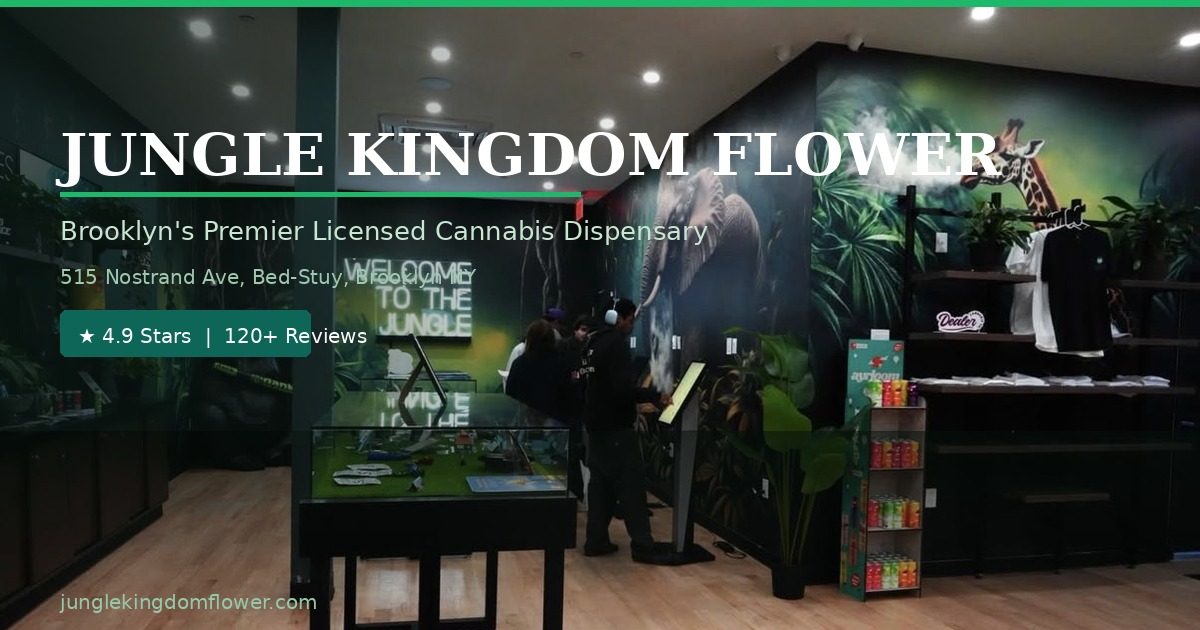
One of the most common questions we hear from customers at Jungle Kingdom Flower is about cannabis tax. How much is it? How is it calculated? Why is it different from regular sales tax? New York uses a unique potency-based tax system that is different from most other states, and understanding how it works helps you make sense of dispensary pricing. This guide breaks down every component of cannabis tax in NYC, shows you real examples of how it is calculated, and explains why we include all taxes in our shelf prices at 515 Nostrand Ave.
New York's Cannabis Tax Structure
New York cannabis is subject to two types of tax. The first is a potency-based excise tax on THC content. The second is the standard combined state and local sales tax. Both apply to every cannabis product sold at licensed dispensaries in New York City.
The Potency-Based THC Tax
Unlike most states that tax cannabis as a percentage of the retail price, New York taxes cannabis based on the amount of THC in the product. The rates are set by product category:
Flower: $0.005 per milligram of THC. For a typical eighth (3.5 grams) of flower testing at 25% THC, the THC content is approximately 875mg. The potency tax on that eighth is 875 x $0.005 = $4.38.
Concentrates: $0.008 per milligram of THC. For a half-gram (500mg) vape cartridge at 80% THC, the THC content is 400mg. The potency tax is 400 x $0.008 = $3.20. For a full-gram cartridge at the same potency, the tax would be $6.40.
Edibles: $0.03 per milligram of THC. For a package of gummies containing 100mg of total THC, the potency tax is 100 x $0.03 = $3.00. For a lower-dose package with 50mg total THC, the tax is $1.50.
This structure means that edibles carry the highest per-milligram tax rate, while flower carries the lowest. The rationale is that different product types deliver THC differently and carry different risk profiles. The potency tax is paid by the distributor and is built into the wholesale price, which ultimately gets passed to the consumer in the retail price.
Standard Sales Tax
In addition to the potency-based THC tax, cannabis products in New York City are subject to standard combined sales tax of approximately 9% (which includes state, city, and metropolitan commuter transportation district tax). This tax is calculated on the final retail price of the product.
How Tax Affects the Price You Pay
Let us walk through a few real-world examples to show how cannabis tax adds up across different product types.
Example 1: Flower Eighth
A Grassroots Cannabis flower eighth (3.5g) at 25% THC with a base price of $45. The potency tax is approximately $4.38. Adding sales tax at 9% on the combined amount brings the total to roughly $53.83. At Jungle Kingdom Flower, the shelf price of $54 includes all of this. You pay $54, period.
Example 2: Vape Cartridge
An Ayrloom half-gram AIO vape at 80% THC with a base price of $35. The potency tax is approximately $3.20. With 9% sales tax on the combined amount, the total comes to approximately $41.63. Our shelf price includes everything.
Example 3: Edible Package
A Kiva Confections Camino gummy pack with 100mg total THC and a base price of $25. The potency tax is $3.00. With 9% sales tax, the total is approximately $30.52. Again, our shelf price covers the full amount.
Example 4: Pre-Roll Pack
A Jeeter Baby Jeeter Infused 5-Pack containing 2.5g of infused flower at approximately 35% THC. The THC content is roughly 875mg. Since infused pre-rolls are taxed at the flower rate, the potency tax is about $4.38. With a base price of $50 and 9% sales tax, the total is approximately $59.27. Our menu price includes all taxes.
Why Potency-Based Taxation Matters
New York's decision to tax by THC content rather than by retail price has several implications for consumers. First, it means that lower-potency products carry proportionally less tax. If you buy a CBD-dominant product or a low-THC flower, your tax burden is lower than someone buying a high-potency concentrate. This creates a natural incentive toward moderation without penalizing the product category itself.
Second, it means the tax more accurately reflects what you are actually buying. When tax is based on retail price (as in many other states), a dispensary could sell the same product at different prices and the tax would change, even though the THC content is identical. Potency-based taxation removes this variable and ties the tax directly to the intoxicating compound.
Third, the tiered rates across product categories (flower, concentrates, edibles) acknowledge that these formats have different bioavailability, onset times, and risk profiles. Edibles, which have a delayed onset and are more frequently associated with overconsumption incidents, carry the highest per-milligram rate. This is consistent with a public health framework. For dosing guidance across product types, see our cannabis dosing guide.
How New York Compares to Other States
Most legal cannabis states use either a percentage-of-price tax (like California's 15% excise tax), a weight-based tax (like Colorado's per-ounce tax on flower), or a combination. New York is one of a smaller group of states using a potency-based model, which cannabis policy experts generally consider more sophisticated and equitable.
The advantage of potency-based taxation is fairness: consumers who buy more THC pay more tax. A consumer purchasing a low-dose Eaton Botanicals 2.5mg gummy pays far less tax than someone buying a high-potency concentrate, which makes intuitive sense. States with flat percentage taxes apply the same rate regardless of potency, meaning a 10% THC flower and a 90% THC concentrate at the same price would carry the same tax, despite vastly different THC content.
Tax-Inclusive Pricing at Jungle Kingdom Flower
At Jungle Kingdom Flower, every price on our menu and shelf includes the full tax amount. We made this decision because we believe transparent pricing is fundamental to a good customer experience. When you see a product priced at $40, you pay $40 at the register. No mental math, no surprise totals, no confusion.
This is not universal across dispensaries. Some shops list pre-tax prices, which can lead to sticker shock at checkout when the potency tax and sales tax are added. Before purchasing from any dispensary, ask whether their listed prices include tax. It can make a meaningful difference in your total spend.
Tax and the Licensed vs. Unlicensed Market
One reason unlicensed cannabis shops can appear cheaper is that they do not collect or remit cannabis excise taxes or sales taxes. This means their prices bypass the potency tax and sales tax entirely. While this may seem like a savings, it comes with significant trade-offs: no lab testing, no quality assurance, no consumer protections, and legal risk for the buyer.
Supporting the licensed market means supporting a tax system that funds public health programs, social equity initiatives, and community reinvestment. The taxes collected on legal cannabis sales in New York are directed toward drug education, treatment programs, and communities that were disproportionately impacted by cannabis prohibition. For a deeper dive into why licensed dispensaries are worth the investment, see our licensed vs. unlicensed dispensary comparison.
Tips for Budget-Conscious Cannabis Consumers
If you are watching your budget, here are practical ways to get the most value without sacrificing quality or safety:
Choose flower over concentrates or edibles. Flower carries the lowest per-milligram THC tax rate at $0.005/mg, compared to $0.008/mg for concentrates and $0.03/mg for edibles. Milligram for milligram, flower is the most tax-efficient product category.
Look for value brands. Brands like Platinum Reserve and Old Pal offer quality products at lower price points. Multi-packs also tend to offer better per-unit value than singles.
Check for deals. Visit our deals page for current promotions and specials at Jungle Kingdom Flower.
Consider lower-potency products. If you do not need high-THC products, opting for lower-potency flower or moderate-dose edibles will naturally reduce the tax component of the price. Our dosing guide can help you find the right potency for your needs.
Visit us at 515 Nostrand Ave in Bed-Stuy, or order online for pickup or same-day delivery across Brooklyn. Every price includes tax. Every product is lab-tested. Every purchase supports the legal market. For more on New York cannabis regulations, see our NY cannabis laws 2026 guide.
Frequently Asked Questions
Shop at Jungle Kingdom Flower
Brooklyn's licensed dispensary at 515 Nostrand Ave, Bed-Stuy. Order for pickup or same-day delivery.
Order Now →